A review of two books: founder stories of Opportunity International and Partners in Health


download          download-1           download-2


I recently read biographies of two extraordinary founders of international NGOs – David Bussau of Opportunity International (OI) and Paul Farmer of Partners in Health (PIH). The former is of well known to OI supporters and students of microfinance, and the latter is well known to public health professionals interested in global health.


Both biographies delve deep into their respective subject’s personal and professional lives. And in the telling, portray a familiar but compelling story of a founder’s creative passion, and an organisation’s birth and growing pains, with a continuing struggle over corporate philosophy, priorities and growth, leading to sometimes difficult choices and compromises.


David Bussau’s story ‘Don’t Look Back’ written by Philippa Tyndale in 2004, and published by Allen & Unwin, is subtitled ‘How an abandoned child became a champion of the poor’. It starts in an orphanage in New Zealand, sees Bussau walk away from a successful business career in his thirties, and ends with him three decades later boarding yet another plane to spread the word about microfinance and social entrepreneurship. In between, the book manages to explain in detail how and why Opportunity International Australia has been so successful in Indonesia, the Philippines and India, failed to grow sustainably in Pakistan after entrenched opposition, and linked up with sister organisations to form OI’s global network. It also explains how the ‘small loans’ idea grew into a more complete ‘microfinance’ package with training, leadership development, business mentoring and savings options.


Philippa Tyndale writes with empathy and directness about Bussau’s personal and family journey, as he and his family move through periods living in Darwin (after the 1974 cyclone), and Bali (after the 1976 earthquake and for long periods thereafter). She also recognises and describes the contribution of his co-workers, both in Australia and ‘in country’, and traces the trajectory of their successes and struggles, as they intertwine with Bussau’s life over decades.


‘Mountains beyond mountains’ written by Tracy Kidder, and published by Random House in 2003, tells an equally unique story. It also carries a descriptive subtitle ‘The quest of Dr. Paul Farmer, a man who would cure the world’.  Brought up on a boat in a Florida bayou, Farmer begins a lifetime’s relationship with the people of Haiti while still a medical student at Harvard. Both a physician and a trained anthropologist, he somehow combines rural health care and grass-roots community development in Haiti, with his work as an infectious disease specialist in Boston. He came to international attention in the 1990’s with his determination to address, rather than ignore, multidrug-resistant tuberculosis, convincing the sceptics by achieving high cure rates. His work spread to other countries (Peru, Cuba, Russia), and Partners in Health had to stretch, adapt and attract more funds. Taking on the multinational drug companies, his PIH co-founder, Jim Kim, helped drive down drug prices for tuberculosis, and later AIDS.


More striking even than Farmer’s personal story is the in-depth description of the village of Cange in Haiti, it’s inhabitants and their beliefs, and the commitment of PIH to provide good local health care despite the constraints of poverty, limited resources and political upheaval. The contrasts with Farmer’s other world in Boston are obvious and unsettling.


Both biographers avoid the trap of painting their subjects as saints. Farmer and Bussau are both complex, sometimes conflicted people. Time away from family on frequent, long trips is a common theme, requiring significant sacrifice by partners and children. It is a price that most people would not choose to pay, whatever the perceived greater good. At one point in the Farmer biography, Jim Kim explicitly warns PIH staffers not to try to imitate Farmer, calling him ‘a model of what should be done, but not a model of how it has to be done.’


Supporters of OI and PIH know the tremendous impact of both men’s work on the lives of the poor. From their different starting positions, they have seen the reality of poverty, and committed themselves to making a positive difference. However, neither organisation promises instant miracles. The journey out of poverty is hard and the gains worthwhile, but the biggest impact is often on the next generation.


Both biographies, written more than 10 years ago, end with the job undone – in Farmer’s case before the devastating 2010 Haiti earthquake, when PIH was in a unique position to help with reconstruction of health care and restoring of hope. In Bussau’s case, with fair access to credit still a distant dream for the majority of the very poor. In 2012, PIH co-founder, Jim Kim, was appointed President of the World Bank, pledging to end extreme poverty by 2030 and boost prosperity in developing countries. Perhaps part of that future lies with combining microfinance with health and education services, and traditional community development? It is not a new idea, but read these stories, and be challenged!

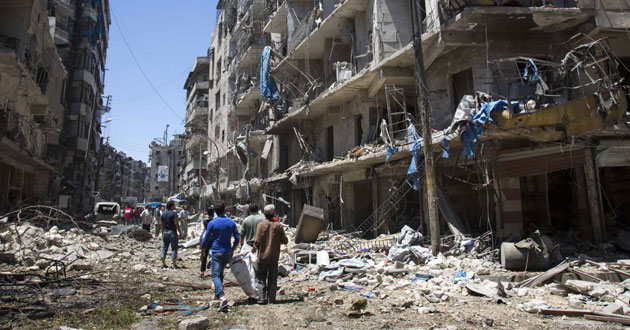


The ‘weaponization’ of health care – an escalating problem, a new concept, and a developing response


A quote on the Red Cross symbol:


“I would never say that it’s not dangerous…but I get the feeling there is erosion of respect and knowledge of the symbol. It’s probably getting more dangerous to work for the Red Cross than when I started.”


From: Dr Jenny Stedmon, anaesthetist and long term Red Cross volunteer, quoted in an article in ‘Australian Medicine’ in December 2015.


This is the third update on an issue that I first blogged about in November 2016.


That article argued for a greater role for technology, allied to existing health and humanitarian systems, in order to better prevent attacks on hospitals, health care workers and health care facilities in conflict zones. Subsequent updates provided more detail on potential technology applications, and emerging trends in terms of numbers and types of attacks.


Since that time, I have spent a short period in Iraq in March 2017 working with the World Health Organization on trauma coordination for the Mosul Offensive (see page 54).


This gave me a chance to see how the UN Security System works in practice in conflict zones, and what technology is deployed.


And soon after that, I spoke at a Roundtable on ‘A 21st century response to attacks on aid and health care workers in conflict zones’, hosted by the United Nations Association of Australia, which explored how this issue constitutes a barrier to the fulfilment of the Sustainable Development Goals. The full list of participants, participant organizations, and recommendations is listed in the formal Communiqué.


Three recommendations were that all parties:

  1. continue to raise awareness of the importance of preventing attacks on health care, as a critical issue in meeting the Sustainable Development Goals in conflict and war-affected countries;
  2. support existing initiatives to prevent attacks, including by the World Health Organisation, International Committee of the Red Cross, Safeguarding Health in Conflict Coalition, and Médecins sans Frontières; and
  3. use their influence and networks to promote the convening of an international meeting of health, humanitarian and technology experts to develop a concrete proposal and agreed plan of action to further reduce attacks on health care.


2017 saw an important new concept introduced by the Lancet- American University of Beirut (AUB) Commission on Syria. Writing in March 2017, based on their detailed analysis of the situation in Syria, the authors defined the weaponisation of health care as ‘a strategy of using people’s need for health care as a weapon against them by violently depriving them of it’. The Lancet article concludes with a series of important policy imperatives, including a continued focus on international humanitarian law, building capacity of health workers, strengthening of global solidarity, and the use of new tools to monitor attacks on health services during and after conflict.


May 2017 saw the one year anniversary of UN Security Council Resolution 2286, ‘Protection of civilians in armed conflict’, co-sponsored by more than 80 member states, that condemned attacks on medical facilities and personnel in conflict.


On that anniversary, the Safeguarding Health in Conflict Coalition (a coalition of more than 30 organizations), released a new report ‘Impunity Must End: Attacks on Health in 23 Countries in Conflict in 2016’, documenting the ongoing extent and intensity of violence against health workers, and used the extensive data to advocate for greater follow-through and accountability by the global community.


And in September 2017, there was a meeting organized by the Lancet-AUB Commission on Syria on ‘Protecting Health Care in Armed Conflict’, held as a side event to the UN General Assembly, sponsored by the permanent missions of Canada, Spain and the Netherlands. At that meeting, Professor Naz Modirzadeh from the Harvard Program on International Law and Armed Conflict, emphasized that the real problem was not humanitarian law, but it’s enforcement. The full meeting video is available on UN Web TV.


Where to from here?


This is an issue that is not going away, but where there are signs that threads of an international response are coming together.


On a broad level, the international community needs to maintain awareness and outrage on this issue, which undermines the Geneva Conventions and the symbolic impact of the Red Cross and Red Crescent, with very real impacts for health professionals and the communities they serve.


The international community also needs to develop more effective and coordinated preventive responses that bridge the UN agencies and major NGOs who employ health care (and other aid and humanitarian) workers in conflict zones.


But there is a further question that I believe is still valid to ask:


‘Can we employ existing technologies more effectively, and in real time, to better prevent attacks on health care, and proactively enforce international humanitarian law?’


To answer that question, a credible auspicing or convening body could follow on from the Sydney Roundtable and commission a process to work through the ‘design elements’ of a new system, with experts and stakeholders from humanitarian law, health care delivery, and potential technology sectors. Similar ‘humanitarian design’ processes are being actively developed, including in collaboration between the US and the Middle East.


An important question, a small investment, much gained if the answer is ‘yes’, and nothing lost if the answer is ‘no’.


If you would like to keep up to date with this issue, a good way is to follow the Safeguarding Health in Coalition twitter feed on @SafeguardingHC, or view their website. eguardinghealth.org 

Now is the time – designing a better system to prevent attacks on health care


aleppo-doctors-may-2016
Doctors in Aleppo protest after attack on maternity hospital in May 2016


I have recently provided an update on spatial and technology aspects underpinning the concept of a ‘digital red cross’.

In this second update, the focus is on numbers, trends and the timing of any response.

Numbers

There are few sources of data on attacks on health care facilities, and only two overviews that I have come across.

The first source is the World Health Organization Report ‘Attacks on Health Care’ produced in 2016 and reporting on a two-year period 2014-2015. Data was drawn from open sources, consolidated and analysed. Erin Kenney was the main author. There was a lack of standardisation of definitions and reporting mechanisms, but some data, however qualified, is better than no data.

Overall, there were 594 reported attacks on health care that resulted in 959 deaths and 1561 injuries.

An attack was defined as ‘any act of verbal or physical violence, or obstruction or threat of violence, that interferes with the availability, access and delivery of curative and/or preventive health services during emergencies.’

Attacks were reported from 19 countries and territories, with 228 or 38% of all attacks in Syria. The next most affected were West Bank and Gaza Strip (53 attacks), Iraq (43), Pakistan (43) and Libya (33). In terms of numbers of deaths, Syria suffered 352 deaths over the two year period, Iraq 114, Pakistan 102, Yemen 70 and Afghanistan 69. Central African Republic, Democratic Republic of Congo, Libya and South Sudan experienced between 30 and 52 deaths each.

The report included attacks on health care facilities, providers, patients, and ambulances and other transport vehicles. Health care facilities (hospitals, clinics or health posts) were the objects of attack in 63% of attacks, and health care providers in 26%.

62% of attacks were reported as intentional, 20% as unintentional and in 19%, intentionality was not reported, unknown or undetermined.

53% of attacks were reportedly perpetrated by State actors, 30% by non-State actors, and in 17% of attacks, perpetrators were unknown, undetermined or unreported.

The second source I have come across is the third annual report of the Safeguarding Health in Conflict Coalition (SHCC) ‘No protection, no respect’, which covers a similar period, 2015 and the first three months of 2016.

It also documents attacks in 19 countries, but not exactly the same ones named in the WHO report. Guinea, Liberia and Sierra Leone are listed in the WHO report, but not in the SHCC Report. Mali, Thailand and Turkey are listed in the SHCC Report, but not in the WHO report.

The SHCC report specifically names five countries – Afghanistan, Iraq, Libya, Syria and Yemen – where hospitals were subjected to aerial bombing, as well as explosives launched from the ground. The SHCC report also provides a detailed country-by-country textual description of the attacks and their impacts on the local populations deprived of essential health services.

Read together, these two reports provide a picture of an issue that is frequent, widespread, devastating in its impacts – and preventable.

Trends

It is hard to make any definitive statements on trends, when the data is limited to only a few years, and definitions are not standardised. However a recent January 2017 report by the Syrian American Medical Society provides a clear picture of the trend of attacks in the country most affected by attacks on health care. ‘The Failure of UN Security Council Resolution 2286 in Preventing Attacks on Healthcare in Syria’ draws on the work of eight dedicated data collectors across Syria, one of whom was killed in an airstrike in 2015. It documents the increase in attacks (one every 4 days to one every two days) following the Russian intervention in October 2015, a lessening of attacks during a ceasefire in March 2016, and a rapid escalation of attacks in the second half of 2016, coinciding with the Syrian government offensive on Aleppo. 172 attacks occurred in Syria in that six-month period, 73 in Aleppo, with August 2016 being the worst month with 41 attacks. No attacks on health care were documented after December 14th, 2016, when the ceasefire in Aleppo took hold.

Given the above data, it is not too hard to predict the following, which can be confirmed when WHO and SHCC release their next reports later this year:

  1. 2016 is likely to be the worst year on record for attacks on health care and resulting deaths; and
  2. there may be a lessening of deaths in 2017, as the military conflict in Syria reduces in intensity.

Timing

A potential decrease in the number of attacks on health care in Syria in 2017, from the extraordinarily high numbers of 2016, should not lessen the impetus to design a better system to prevent such attacks globally.

Syria is currently the main site of such attacks but they have occurred in at least 21 other countries in the last two years, according to the WHO and SHCC reports.

Indeed, if we were to accept the status quo, and wait for the ‘next Syria’, that would be a moral mistake of the highest order.

Instead, we should use this period to evaluate new preventive systems in countries where the intensity of the conflict may allow such systems to be trialled.


As previously, I’d appreciate comments, feedback, and offers of help to push this proposal forward, or to stimulate better options, via email to tarun.weeramanthri@bigpond.com

(I haven’t provided formal references in this update. If readers wish to access the articles and reports referred to, they are all free and online, and will appear in your preferred internet browser, through searching for the combination of authors and titles. If you have any problems, please contact me direct.)

Digital Red Cross – update and more detail on spatial/technology aspects

syria-nov2016

In November 2016, World Health Organization (WHO) condemned attacks on 5 hospitals in Syria


Since posting the  original blog in early December, I have been working to promote the concept of a Digital Red Cross, through various networks, international agencies and NGOs. These discussions are ongoing, but in the meantime I’d like to provide the first in a planned series of updates in 2017; to flesh out the concept, deal with some of the arguments for and against, examine other options, and identify key stakeholders.


In this first update, the focus will be on:

  1. recent articles on attacks on health care workers;
  2. use of spatial technology in disaster, conflict and emergency situations: and
  3. more detail about the potential of blockchain technology for the humanitarian sector.


Recent articles on attacks on health care workers


In the January 2017 issue of the Bulletin of the World Health Organization, there are two articles on the subject of attacks on health care workers.


In ‘Attacks depriving people of urgently needed health care’, Jan Dirk Herbermann and Fiona Fleck interview key stakeholders (including from International Red Cross and Red Crescent Movement, WHO and MSF), and focus on the WHO data reports, the long term consequences of such attacks, and the importance of the international legal frameworks, Geneva Conventions, and the Rome Statute (the treaty that established the International Criminal Court in 1998). They highlight the need for ‘new strategies…to ward off deliberate attacks.’


In ‘Documenting attacks on health workers and facilities in armed conflicts’, authors from King’s College London and Karolinska Institute in Sweden report on a workshop held in London in December 2015 titled ‘ Eliminating violence against health workers: from theory to practice.’ Again, they stress the importance of systematic data collection, development of evidence-based context-specific guidelines, and building on current campaigns such as Health Care in Danger (ICRC) and Medical Care Under Fire (MSF).


My sense from reading this and other reports is that we have moved quickly from identifying the problem (it was raised at the World Health Assembly for the first time in 2014), to documenting its extent and trends, and exploring solutions that combine elements of awareness, international law, and country-specific approaches. What is missing however, and is the subject of these blog posts, is the full exploitation of new technologies and the consideration of new international verification systems.


Use of spatial technology in disaster, conflict and emergency situations


I have recently co-written an article with Peter Woodgate from the Cooperative Research Centre for Spatial Information titled ‘Spatially Enabling the Health Sector’. It provides an overview of developments in spatial technologies, which may be useful for the reader not familiar with GIS/spatial terminology, and how it might be further utilized in health care broadly.


Anders Lyseen and colleagues have also categorized 865 articles into four domains (spatial analysis of disease, spatial analysis of health service planning, public health, and health technologies and tools) in their 2014 article ‘A review and framework for categorizing current research and development in health related GIS studies’.


There is no shortage of material, textbooks and training courses on this subject, but I would recommend starting with one recent systematic review, titled ‘The impact of digital technology on health of populations affected by humanitarian crises: recent innovations and current gaps’, published in late 2016 in the Journal of Public Health Policy, by Sandra Mesmar and colleagues from the American University of Beirut and the Arab Digital Public Health Initiative. They identified 50 such technologies, many of them in the ‘spatial, geospatial, GIS, and spatial decision support system’ category, and some in the ‘hand-held devices and data entry’ category, organizing them according to the stage of the humanitarian cycle they were used in (preparedness, response and recovery). They found that they facilitated communication, coordination, and data collection/analysis, enabling timely responses in humanitarian contexts.


In particular, they found five initiatives in which GIS had been a ‘major game changer’. They found that GIS was used to portray areas of conflict through ‘live crisis maps’ (documenting intensity of conflict and numbers of people in need of assistance), to match supplies to service demands, to create warnings, to track population movements, to assist targeted communication via text messages and social media, and to inform logistics, coordination and evacuation.


Let me pick out a couple of examples to show the data sharing and skills available across the whole humanitarian sector. Data from the Libya Crisis Map produced by UN OCHA (Office for Coordination of Humanitarian Affairs) was integrated into the UN official 3-Ws (Who is doing What and Where) coordination framework, and spatial tools were also used extensively in the response to the Ebola outbreak. The work of the Humanitarian Open Street Map team is highlighted in the Mesmar article. The World Health Organization used ESRI Story Map Journal to present Ebola Situation Reports in their Global Ebola Response Monitoring and Mapping System. NetHope were on the ground in West Africa providing internet access to enable, amongst other things, communication and mapping. MapAction were involved early in the outbreak. And MSF-Switzerland deployed a GIS expert for the first time in the field in Guinea.


There are plenty of other case studies of GIS use in the 2013 World Disasters Report produced by IFRC, that was thematically titled ‘ Focus on technology and the future of humanitarian action.’ Indeed, WHO has been using GIS technology in one form or another since the early 2000s e.g. through the HealthMapper and Global Atlas programs. ESRI, the largest private sector geospatial company in the world, already partner the UN to assist with disaster, food security and climate change relief measures, produce data for UN Sustainable Development Goals (SDG), and to create an SDG Engagement Platform.


The brief overview above supports the contention that spatial technology is already utilized extensively in various parts of the health and humanitarian sectors, and that considerable expertise could be brought together from public, private and NGO sectors to assess its potential further contribution to preventing attacks on health care facilities and health workers.


More detail about the potential of blockchain for the humanitarian sector


Let me begin by saying again that I have no specific expertise in this area, and no shares whatsoever, let alone in any technology company!


But there are lots of extremely able technology professionals, who could provide a view on the potential of this and other technology options, should they be asked or ‘convened’.


The Digital Humanitarian Network (DHN) is a network of networks, aiming to create a bridge between volunteer and technical communities, and formal humanitarian organizations. It specializes in real-time monitoring, rapid geo-location of events and infrastructure data, GIS and big data analysis. In association with UN OCHA, it has produced two complementary guidance documents, one on ‘Collaborating with Volunteer and Technical Communities’ and the other on ‘Collaborating with Formal Humanitarian Organizations’, which taken together describe different types of organizational culture in the humanitarian sphere, and recommends ways to work together. And in 2015, it published ‘ Guidance for Incorporating Big Data into Humanitarian Operations’, examining the differences and complementarity of so-called Big Data, and traditional data.


DHN’s most recent report is ‘Blockchain for the Humanitarian Sector: Future Opportunities’ and has just been published with the support of UN OCHA in November 2016.


In this report, Vanessa Ko and Andrej Verity give an extremely clear overview of blockchain technology (‘a decentralized database that records transactions shared across a network of multiple participants’, and that provides information that is ‘transparent, traceable and secure’), and how it could be applied to a range of humanitarian challenges in information management, identification, supply chain tracking, cash programming and humanitarian financing. They highlight challenges (including internet access, scalability, and regulatory), as well as opportunities, and emphasise the need for well-evaluated pilots of this promising technology, which is still in an early phase of development. It may have a role to play in preventing attacks on health care facilities, because of its potential uses in establishing identity of infrastructure and health care personnel.


Going back to the Mesmar paper mentioned earlier. The authors highlighted the need for evaluation of all digital technologies, including through iterative action-research cycles and deep user feedback, and the creation of ‘a space for dialogue between technology designers and populations affected by humanitarian crises.’ It seems to me that a workshop convened with health, humanitarian and technology stakeholders present, might constitute such a ‘space for dialogue’. The purpose would be to develop options for an agreed system, bringing together existing ‘pieces’ of workforce and technology, which could then be trialled and evaluated. It would of course require political will and leadership, but in a year when we have a new UN Secretary General, and we will have a new WHO Director General, that is entirely possible.


As always, I’d appreciate comments, feedback, and offers of help to push this proposal forward, or to stimulate better options, via email to tarun.weeramanthri@bigpond.com


(I haven’t provided formal references in this update. If readers wish to access the articles and reports referred to, they are all free and online, and will appear in your preferred internet browser, through searching for the combination of authors and titles. If you have any problems, please contact me direct.)